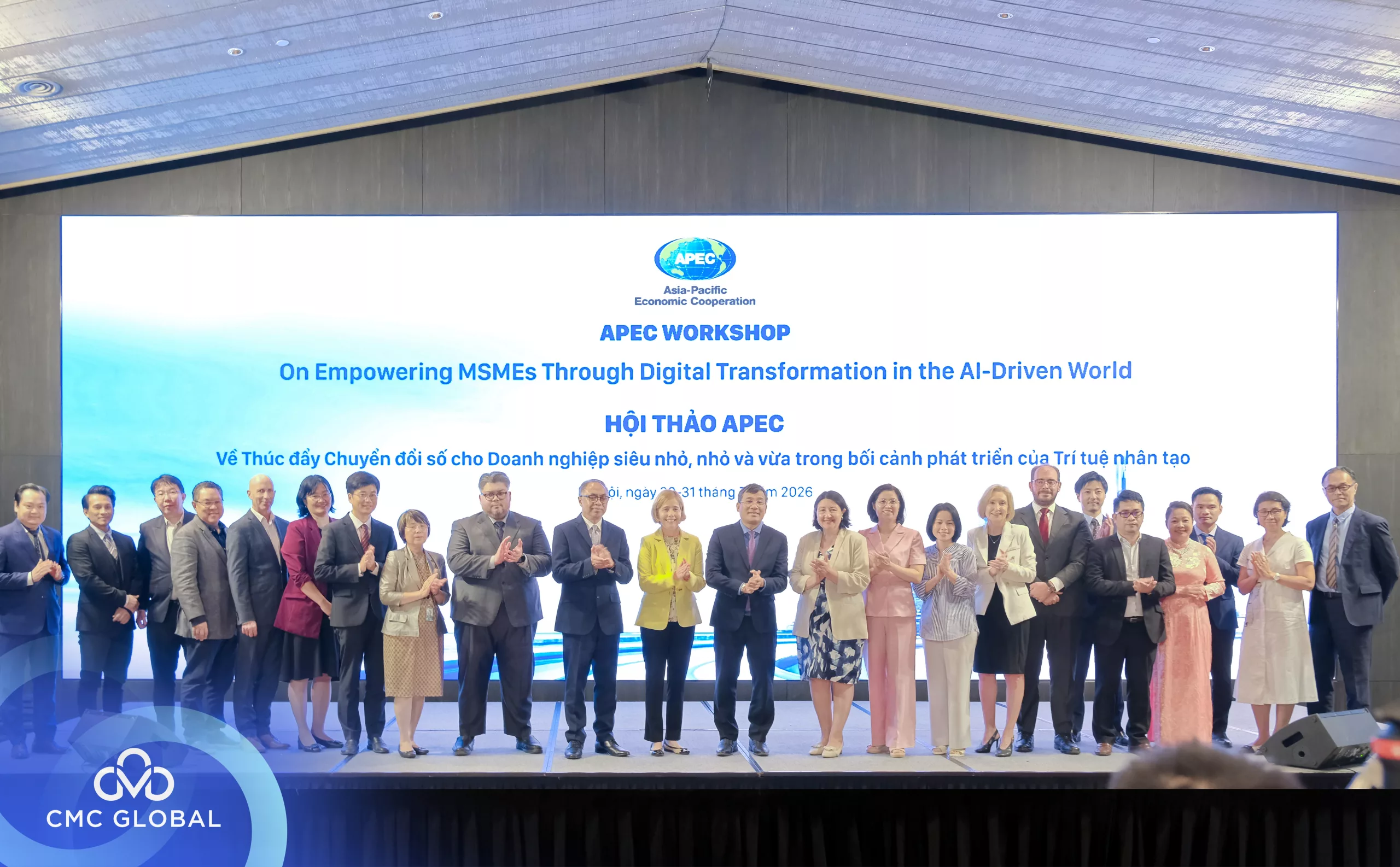
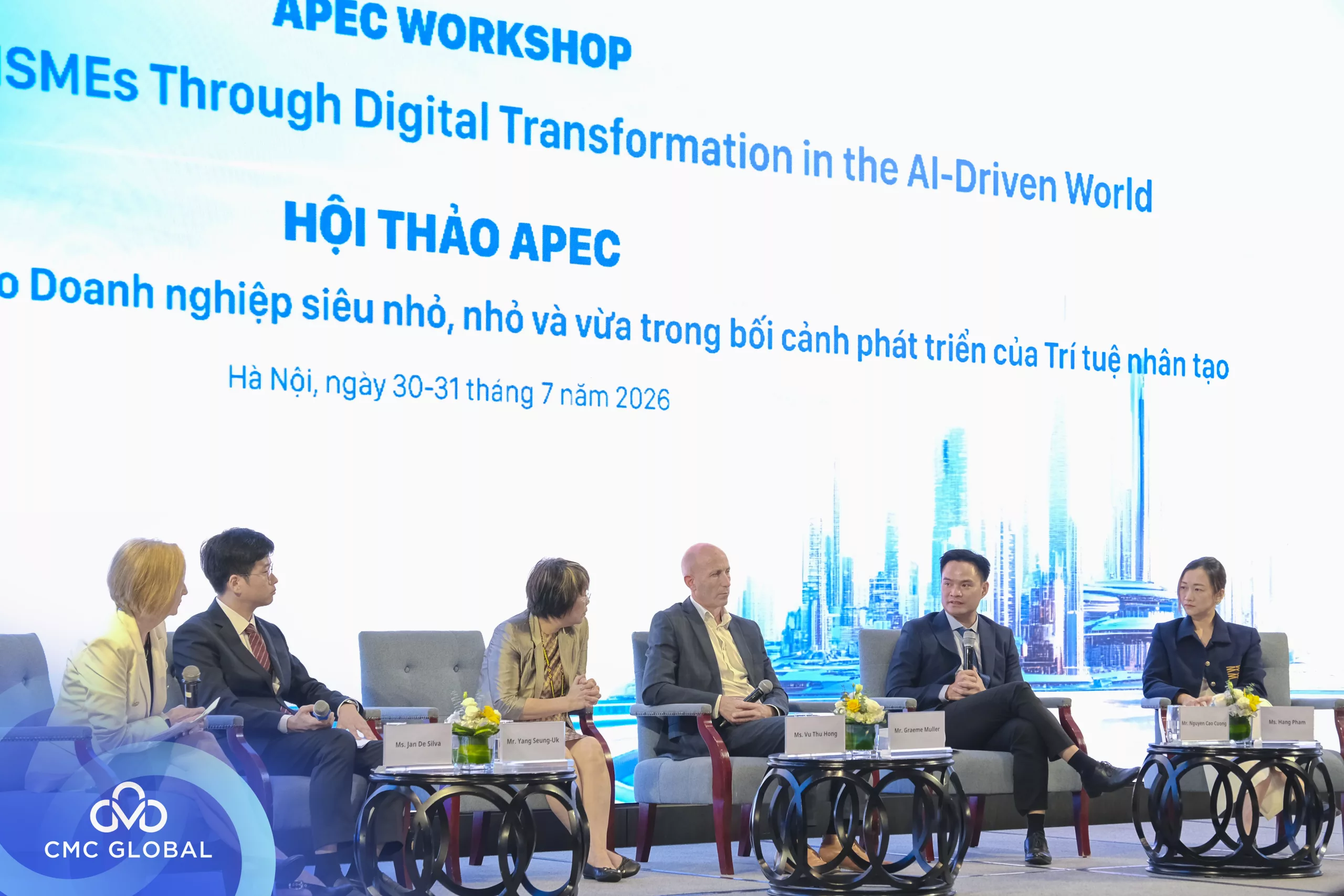
On July 30, the APEC Workshop on Promoting Digital Transformation for Micro, Small and Medium Enterprises (MSMEs) in the Age of Artificial Intelligence officially opened in Hanoi.
Co-organized by the APEC 2027 National Secretariat (Ministry of Foreign Affairs of Vietnam) and the Agency for Private Enterprise and Collective Economy Development (Ministry of Finance), the event delivered a clear consensus: artificial intelligence is no longer a vision of the future, it is a tangible growth driver that enables MSMEs to overcome the limitations of scale and move up the global value chain.
The workshop brought together nearly 150 delegates from APEC member economies, international organizations including the World Bank (WB), International Monetary Fund (IMF), Organisation for Economic Co-operation and Development (OECD), and Asian Development Bank (ADB), as well as representatives from leading technology companies such as Google, Meta, Toshiba, and CMC Corporation.
During the event, experts praised Vietnam’s initiative to place MSMEs at the center of regional cooperation, particularly as the economy prepares for APEC Vietnam 2027. With more than 97% of businesses across the region classified as MSMEs, empowering this sector to embrace AI is increasingly viewed as a critical enabler of inclusive and sustainable economic growth.
From AI Adoption to AI Integration: Closing the Gap
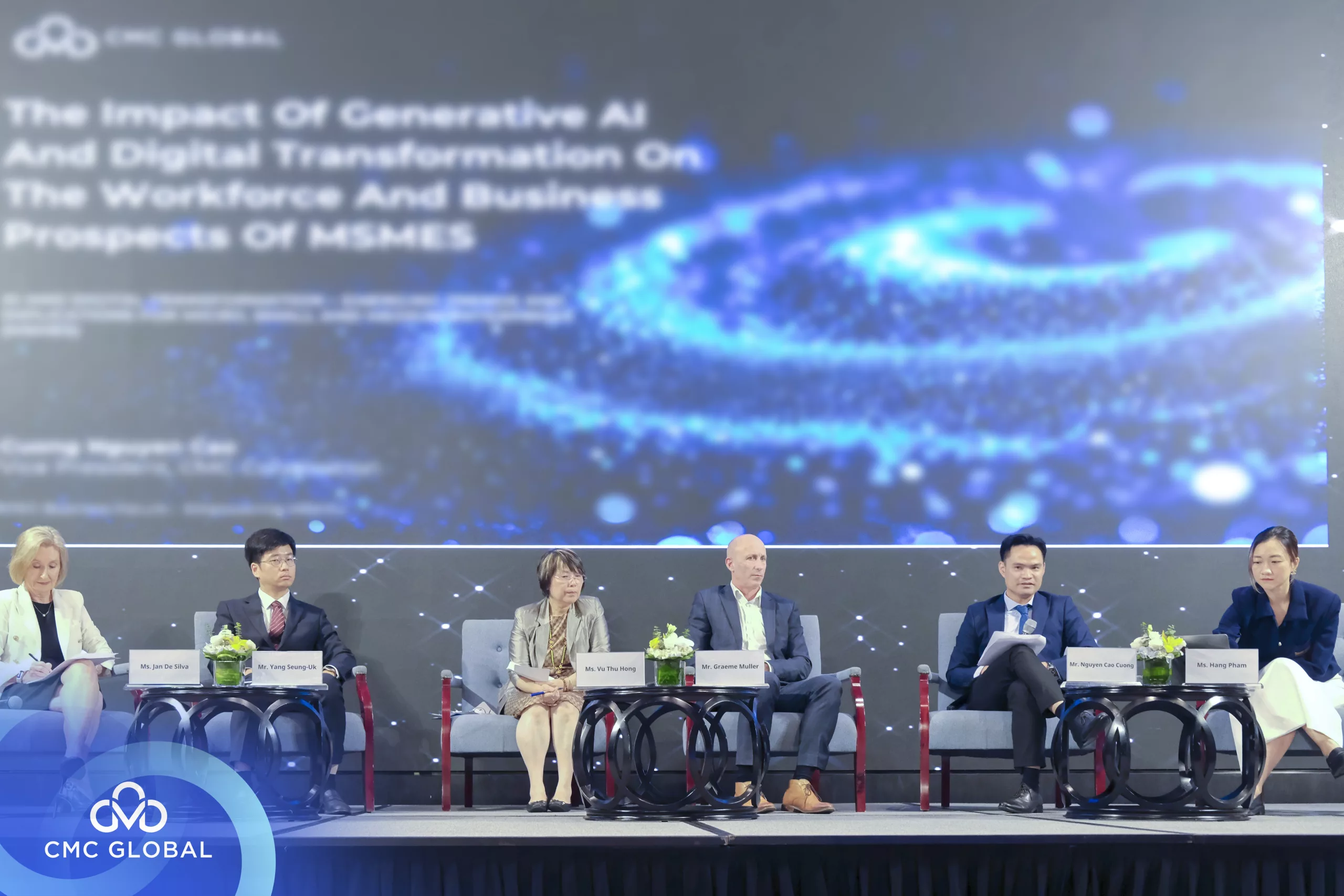
Speaking during the main discussion session, Mr. Nguyen Cao Cuong, Vice President of CMC Corporation and Chief Sales Officer of CMC Global, highlighted what he described as a growing “digital paradox.”
Citing OECD research, he noted that while 39% of small and medium-sized businesses have adopted AI solutions and 26% are already using Generative AI, only around 8% have successfully integrated AI into their core business operations. This, he argued, reflects a significant gap between simply adopting AI tools and embedding AI into business processes.
“Competitive advantage no longer comes from owning an AI tool,” Mr. Cuong said. “It comes from the ability to integrate AI into operations in a reliable, standardized, and scalable way. For MSMEs, this is not merely a technology challenge, it is fundamentally a challenge of people, culture, and institutions.”
A key message echoed throughout the workshop was that AI is becoming a powerful equalizer of competitiveness. Unlike multinational corporations constrained by lengthy approval processes, MSMEs are often more agile and can leverage AI to accelerate innovation, strengthen workforce capabilities, and participate more deeply in global value chains.
Mr. Cuong also shared CMC’s practical experience in developing an AI Readiness Assessment framework built around three key stages: Assess and benchmark organizational readiness, develop an AI roadmap and launch pilot initiatives, build workforce capabilities to support AI transformation.
The framework was presented as a practical reference model for MSMEs looking to embark on their AI transformation journey in a structured and sustainable manner.
Vietnam Reinforces Its Leadership in Regional Cooperation
Addressing the workshop, Mr. Nguyen Minh Vu, Member of the Party Central Committee, Permanent Deputy Minister of Foreign Affairs, and Head of the APEC 2027 National Secretariat, reaffirmed Vietnam’s commitment to strengthening regional collaboration.
“Vietnam looks forward to working closely with APEC member economies to promote technology transfer, share best practices, develop digital talent, and build an enabling ecosystem that allows MSMEs to fully harness digital transformation and artificial intelligence.”
Representatives from international organizations also agreed that the workshop’s practical initiatives would make meaningful contributions to APEC’s digital economy agenda while supporting Vietnam’s preparations for hosting APEC 2027.
Advancing an Inclusive Digital Economy
Policy recommendations developed during the workshop will be submitted to the APEC Small and Medium Enterprises Working Group, carrying a unified message: digital transformation and AI must be business-centered, built on regional cooperation, and ultimately focused on people.
Closing his presentation, Mr. Nguyen Cao Cuong emphasized this vision:
“Close collaboration among APEC member economies, international organizations, and the business community will turn AI into a powerful catalyst, enabling MSMEs to overcome the constraints of scale and unlock sustainable growth across the Asia-Pacific region.”
The workshop once again underscored the growing momentum behind practical regional collaboration, reinforcing optimism that science, technology, and innovation will continue to drive sustainable growth for both Vietnam and the broader APEC community.