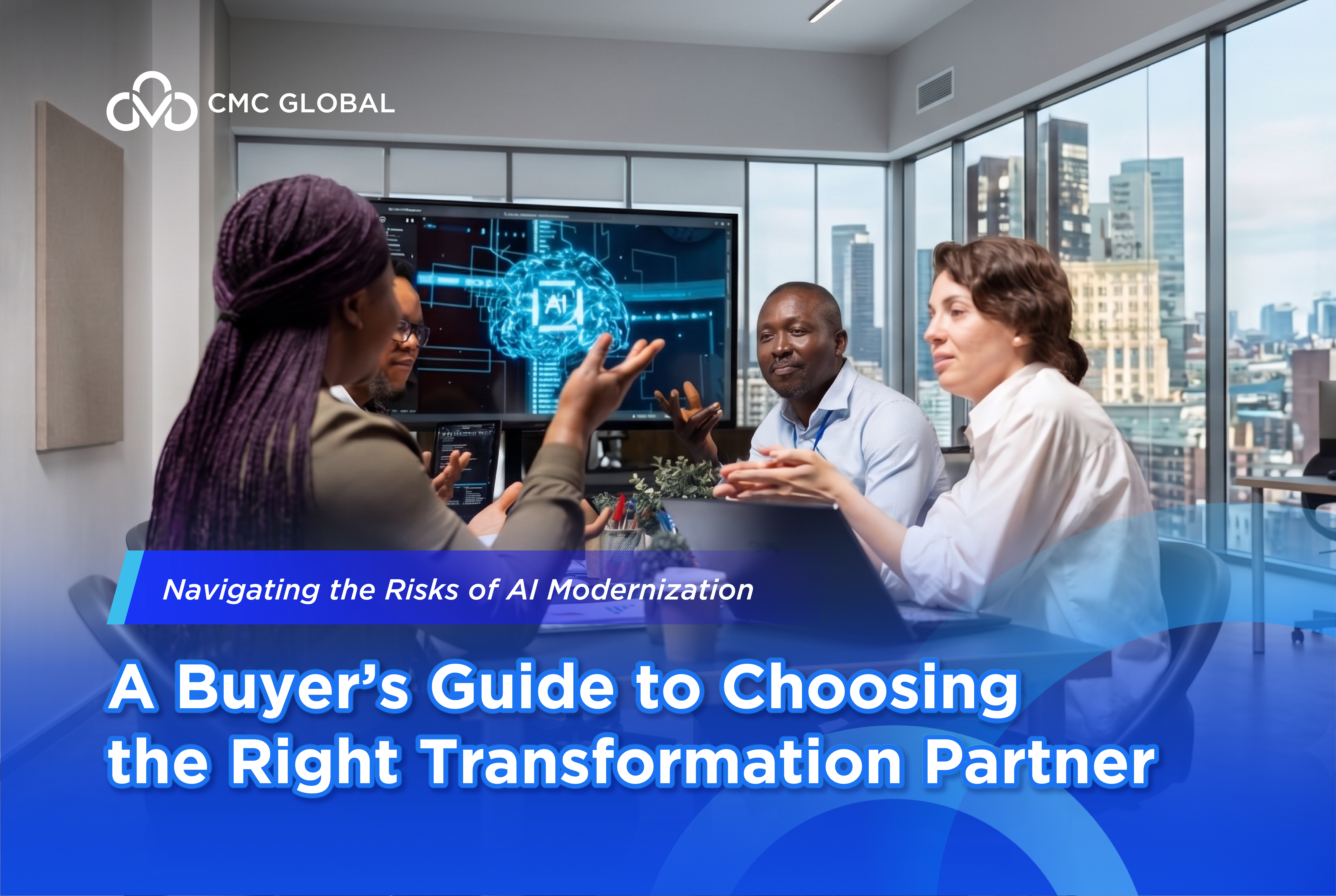
MIT’s NANDA initiative found that AI projects built by specialized AI vendors or through external partnerships succeed about 67% of the time, compared to only one-third for in-house builds. However, not every vendor is equally equipped to handle complex modernization work.
When modernizing core platforms in banking, insurance, retail, or healthcare, leaders must balance the speed of artificial intelligence with disciplined engineering rigor. This guide examines the risks leaders should uncover and the criteria they can use to identify a partner capable of delivering modernization with confidence.
The Unspoken Risks of AI in Legacy Modernization
In earlier discussion in this series, we have examined how agentic architecture reconstructs complex codebase and analyzed the mounting hidden costs of deferring legacy migration. Yet, enterprise adoption reveals a clear divergence between surface level syntax correctness and architectural security.
According to the Veracode Spring 2026 GenAI Code Security Update, 45% of AI generated code samples introduce security vulnerabilities, even as overall syntax pass rates surpass 95%. In regulated industries, this risk is amplified by the complexity of legacy business logic, where minor changes can trigger financial, operational, or compliance consequences.
Three risks demand executive attention:
- Hidden Logic & Security Risks: AI-generated code may compile and pass basic tests while introducing subtle logic errors or security vulnerabilities that surface only in production.
- Incomplete System Discovery: Automated analysis sees what is documented in the codebase, but may miss undocumented scripts, database triggers, scheduling jobs, and external dependencies that keep legacy systems running.
- Governance & Compliance Drift: Faster AI-driven development can compress critical review gates, creating exposure across requirements such as HIPAA, PCI-DSS, and DORA.
Executive Risk Mitigation Across the Project Lifecycle
Technology executives can protect core operations by establishing strict governance protocols across 03 distinct transformation phases:
- Before Modernization: Audit data cleanliness and quantify technical debt at the component level. Establish compliance requirements and formal risk registers before generating any target code.
- During Modernization: Maintain experienced engineers as the central decision authority. Mandate parallel run periods for mission critical transaction engines and require senior specialists to review every automated output.
- After Modernization: Deploy continuous regression monitoring, runtime telemetry, and behavioral observability to detect data drift before client’s experience disruptions.
The 5-Point Framework for Choosing an AI Transformation Partner
Selecting an enterprise transformation partner requires evaluating technical capabilities, governance maturity, and collaborative delivery standards. C suite buyers should assess prospective vendors against five core pillars:
| Evaluation Dimension | What to Look For | Red Flags |
| 1. Deep Legacy Stack Expertise | Engineers holding deep production fluency in both legacy stacks (COBOL, Java EE, .NET, on-prem SQL) and modern cloud architectures. | Vendors relying purely on junior staff or prompt wrappers without native legacy debugging experience. |
| 2.Transparent AI Methodology | Clear documentation of the specific agent frameworks, deterministic guardrails, and review steps in use. | Vague marketing claims of proprietary magic or autonomous agents lacking auditable architecture. |
| 3. Sector and Regulatory Compliance | Demonstrated compliance expertise with standards like SOC 2, HIPAA, DORA, and regional data residency laws. | Generic software houses that treat security and regulatory requirements as secondary post-launch tasks. |
| 4. Outcome-Focused Milestones | Scoping structured around measurable business targets, such as reduced processing latency, eliminated licensing costs, and early production wins. | Commercial models focused strictly on billable hours or high-level slide deliverables. |
| 5. Long-term support | Engagement structures that train internal teams and supply full documentation, ensuring long term independence. | Restrictive delivery models designed to create ongoing vendor dependency. |
CMC Global: Specialized Engineering Without the Operational Burden
Modernizing core enterprise infrastructure should deliver predictable business agility while maintaining complete operational continuity. CMC Global combines deep domain engineering with purpose-built agentic capabilities to deliver secure, production-grade transformations. Our AIX Modernization approach embeds agentic intelligence directly into our delivery framework:
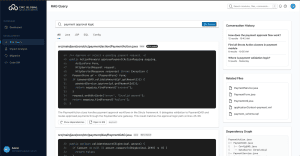
- Semantic Repository RAG Querying: Queries millions of lines of legacy code in seconds to extract undocumented business rules, legacy constraints, and calculation logic.
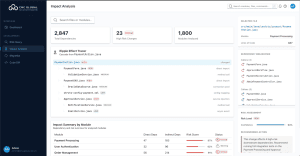
- Ripple Effect Tracer and Dependency Graphing: Visually identifies circular dependencies, database couplings, and integration touchpoints across modules before refactoring begins.
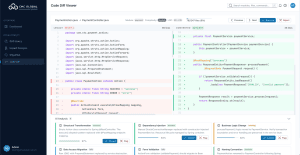
- Interactive Code Diff and Behavioral Validation: Presents side-by-side views of source and modern target code alongside automated test harnesses, enabling our senior engineers to validate changes with precision.
We are not trying to sell something you buy or implement. We provide the expertise, methodology, and agentic capabilities to show you what can be modernized, how, and what it takes to get there.
All you need to do: Provide your legacy context and complete our Agentic Modernization Readiness Assessment, and we’ll handle the complex work of evaluating, refactoring, validating, and planning your modernization journey.
Whether you’re exploring your next step or need to move fast, we help you prioritize, plan, and modernize with confidence. Let’s start modernizing