For technology leaders across Southern California, legacy systems have become a strategic constraint rather than a stable foundation. Core platforms supporting banking, retail, and healthcare operations continue to run on aging technologies such as COBOL, Java EE, Struts, legacy .NET, and on premises SQL databases.
Maintaining these environments consumes valuable engineering capacity. Large enterprises spend up to 70% of IT resources maintaining legacy applications, while developers lose more than 17 hours each week resolving technical debt instead of delivering innovation.
As AI becomes a business priority, monolithic architecture increasingly limits adoption. Legacy modernization is no longer just an IT initiative. It is a prerequisite for enterprise AI and long-term business growth.
AI Readiness Becomes a Hard Architecture Requirement
Modernization plans were historically treated as discretionary infrastructure upgrades that could be deferred when budgets tightened. Today, enterprise technology leaders recognize that legacy infrastructure actively limits commercial agility. According to Forrester research, 91% of IT leaders report that application modernization is necessary to enable AI advancements within their business operations.
Organizations operating on 15 to 20 year old platforms must modernize their foundational architecture to capture the business benefits of artificial intelligence. Modern generative models, multi-agent orchestrations, and real-time retrieval-augmented generation (RAG) require clean APIs, event driven pipelines, and modular cloud infrastructure.
Attempting to layer modern AI capabilities over monolithic, undocumented codebases leads to unpredictable system behavior, high API latency, and severe compliance risks. Modernizing the underlying application architecture establishes the clean data paths and modular service boundaries required for scalable enterprise AI deployment.
Get Your AI Legacy Modernization Readiness Score
Evaluating a legacy estate requires detailed visibility into system dependencies and business logic density.
Get a facilitated readiness assessment from CMC Global to analyze your application portfolio, quantify technical debt at the component level, and establish a clear modernization roadmap.
Why Organizations Are Turning to Agentic AI for Legacy Modernization
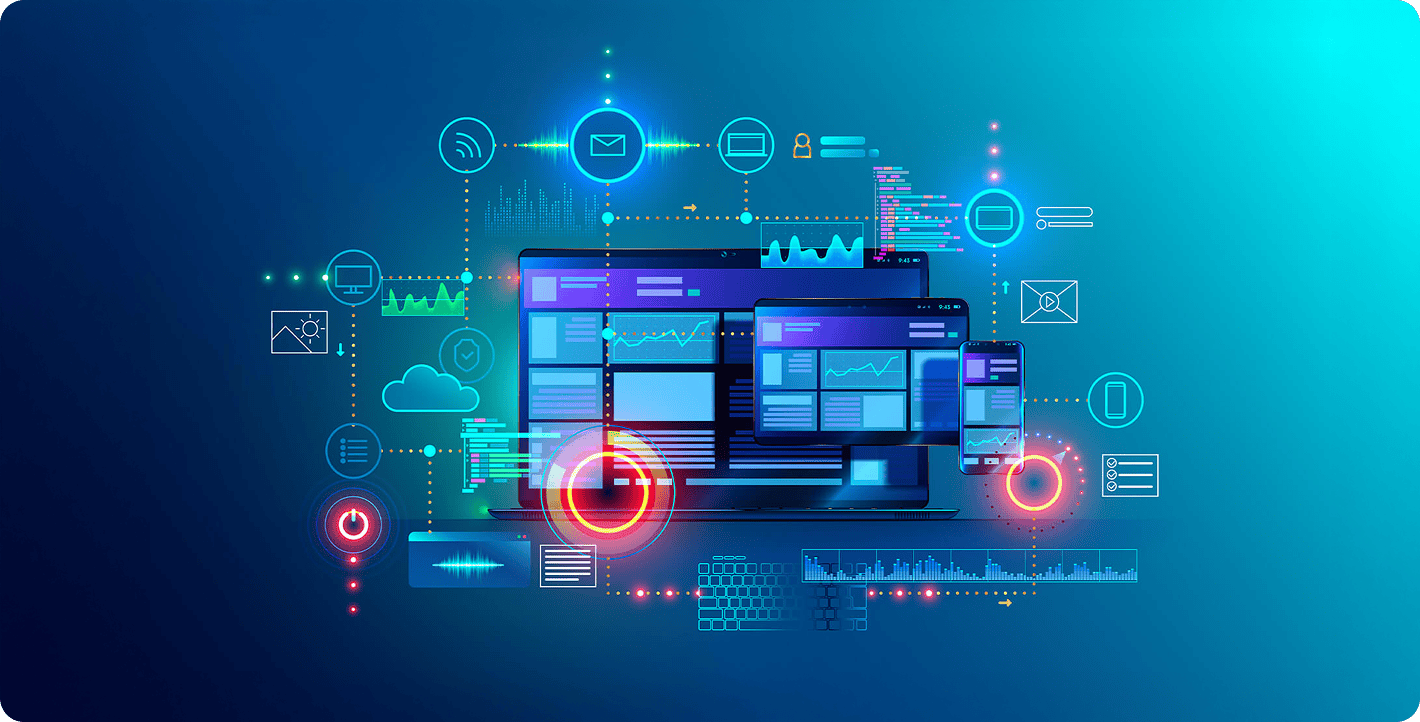
Traditional application modernization initiatives frequently encounter severe operational obstacles. Manual line-by-line code rewrites require massive engineering effort, often spanning years while incurring significant budget overruns. Additionally, organizations face an escalating talent crisis as veteran engineers fluent in legacy frameworks retire, leaving critical business logic undocumented.
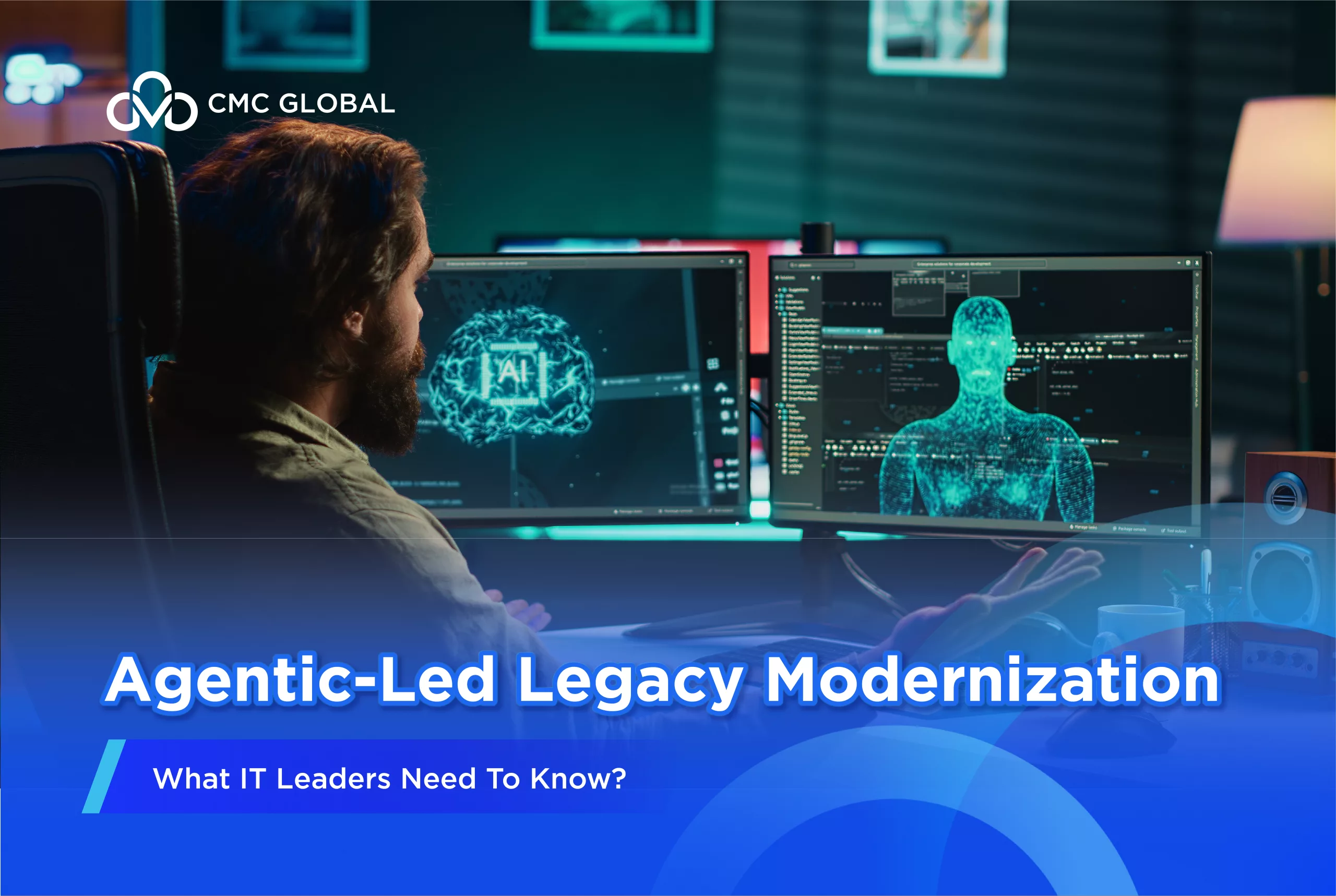
To address these challenges, enterprise technology teams are adopting Agentic AI workflows. Unlike standard developer assistants that only suggest code snippets, Agentic AI operates as a collaborative execution system across the full software lifecycle.
CMC Global’s AIX Legacy Code Migration Platform leverages an agentic approach to accelerate modernizations while preserving core business logic:
- Hybrid Conversion Architecture: The platform pairs Abstract Syntax Tree (AST) deterministic parsing for exact structural mapping with Large Language Models (LLMs) for intelligent logic translation. This dual approach ensures high code quality and strict structural integrity.
- Automated Knowledge Recovery: AI agents reverse-engineer legacy codebases to extract hidden business rules, automatically building updated requirement specifications and functional catalogs.
- Real-Time Impact Analysis: Integrated analysis tools generate dynamic dependency graphs, flagging downstream ripple effects and technical risks before engineers modify production code.
- Human in the Loop Validation: Built-in code diff viewers present side-by-side comparisons of legacy and converted code alongside automated risk scores, keeping senior engineers in control of final architecture decisions.
How Agent-Assisted Migration Operates Across Key Industries
Agentic modernization allows enterprise organizations to compress assessment and translation timelines while maintaining operational continuity.
Financial Services (Banking, Finance & Insurance)
Financial institutions frequently run core transaction processes on legacy C, COBOL, or VB6 applications tied to nightly batch processing. These batch windows create operational delays and prevent real-time financial reporting.
Using agentic migration workflows, banking platforms can refactor legacy C or COBOL transaction logic into secure Java or C# environments running on modern serverless infrastructure like AWS Lambda. This transformation enables real-time fraud detection and instant payment processing while preserving complex ledger accounting rules.
Retail & Logistics
Retail enterprises often rely on monolithic order management systems built on legacy Struts or .NET frameworks, using basic file transfer protocols (FTP) to sync inventory data across stores. Single system errors can disrupt nationwide fulfillment routines.
Agent-assisted refactoring analyzes the monolithic codebase to identify domain boundaries. The platform decomposes the monolith into independent microservices, replacing batch transfers with managed REST APIs. Retailers achieve unified omni-channel inventory visibility and scale order throughput during high-volume holiday periods without risking system stability.
Healthcare
Healthcare providers and insurers manage patient records and claims processing using legacy systems containing decades of customized business rules. Missing documentation makes manual migration risky due to strict HIPAA compliance standards.
Automated reverse engineering parses legacy healthcare codebases to extract embedded regulatory logic and business rules. AI agents generate comprehensive requirement documentation and automated test suites, enabling smooth migration to modern cloud environments while maintaining strict data governance and regulatory compliance.
Is Your Organization Ready? A Self-Assessment
Before initiating an agentic modernization program, IT leaders should evaluate their operational readiness across five key dimensions:
| Assessment Dimension | Key Evaluation Questions | Target Benchmark |
| 1. Legacy Estate Visibility | Do you maintain an updated map of all software dependencies, integrations, and application owners? | Dependency maps are programmatically tracked rather than stored in engineer memory. |
| 2. Technical Debt Awareness | Is technical debt measured and quantified at the component level? | A prioritized risk register exists for every application module. |
| 3. Data Readiness | Are database schemas documented, accessible, and clean enough for migration? | Legacy constraints and schema changes are audited. |
| 4. Governance & Compliance | Are security and compliance teams involved prior to target architecture design? | Regulatory requirements are built directly into the modernization architecture. |
| 5. Executive Authority | Is there a designated program owner with budget authority to make architectural calls? | Clear executive leadership exists to prevent organizational decision delays. |
Every successful modernization strategy begins with visibility.
Complete our 5-minute Legacy Modernization Readiness Assessment to evaluate how prepared your applications are for AI driven transformation.
Your personalized executive report includes a maturity benchmark, architecture insights, and a practical 90-day roadmap to help your leadership team prioritize investments, reduce modernization risk, and accelerate business outcomes.