The Challenge
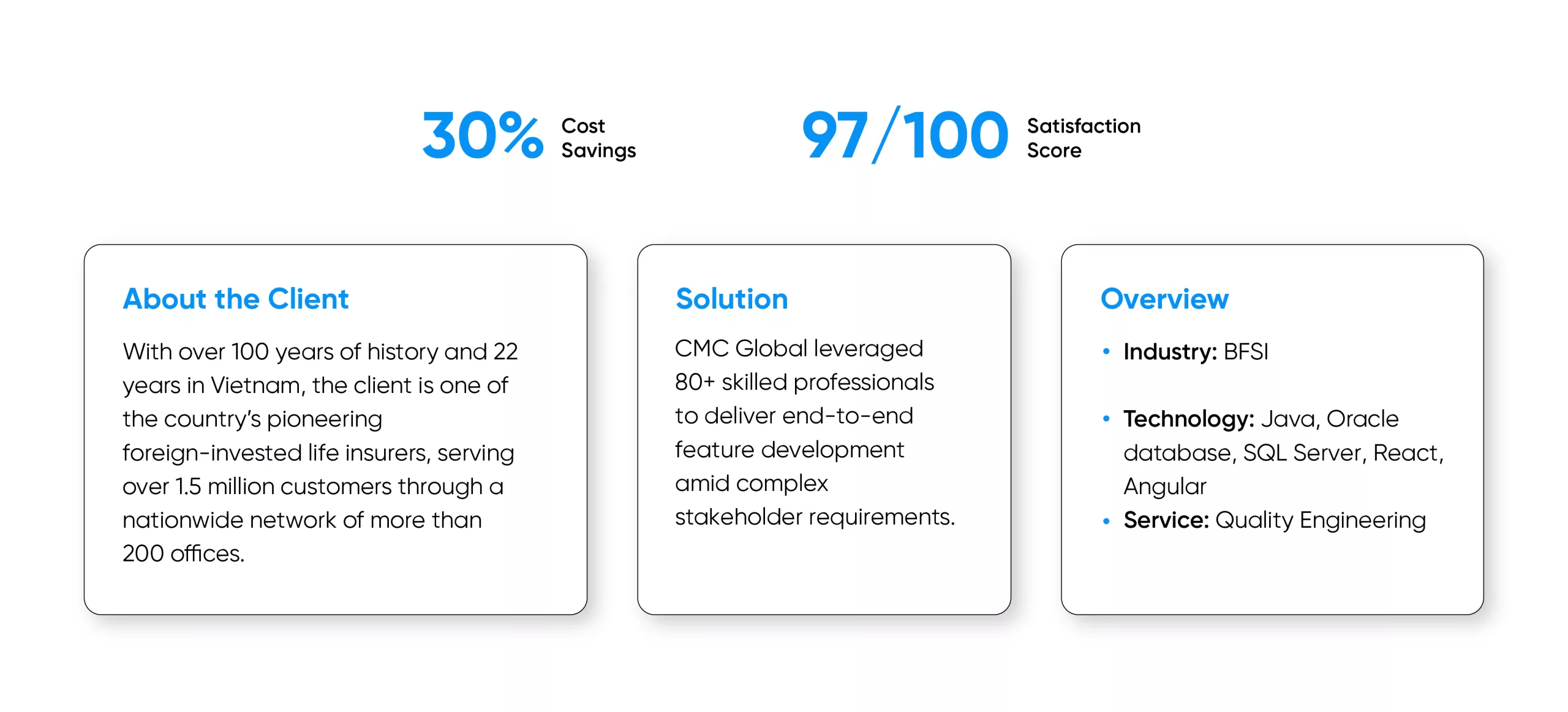
The client had developed an Application Management Services (AMS) system, supported by a dedicated team of specialists. However, following the system’s transition to the operational phase, most of the core project team had moved on, creating a need for a reliable team to take over ongoing operations and maintenance.
To optimize operational costs while ensuring system continuity, the client entrusted CMC Global with AMS operations, leveraging its technical expertise and capacity to manage large-scale systems. Beyond maintaining the existing system, CMC Global was also expected to support ongoing feature development to meet the client’s evolving needs.
The Solution
CMC Global structured the project around three key workstreams
1. System Maintenance and Operational Support
- Issue Diagnosis and Resolution: Identified and resolved system issues to minimize operational disruptions.
- Operations Team Support: Provided technical assistance to address operational challenges and facilitate incident resolution.
- System Performance Optimization: Identified opportunities to improve system performance and operational efficiency.
2. New Feature Development
- Requirement Impact Assessment: Analyzed business requirements and evaluated their impact on existing system functionality and architecture.
- Wireframe and Database Design: Developed wireframes to define user interfaces and workflows, along with database designs to support new features.
- Code Refactoring and Review: Refactored existing source code to improve maintainability and conducted code reviews to ensure implementation quality and adherence to coding standards.
3. Quality Assurance
- Automated Testing: Implemented test automation for unit, API, and UI testing to support consistent and efficient validation.
- Knowledge Documentation: Documented technical knowledge and solution details for each release to support knowledge transfer and future maintenance.
- Two-Layer Quality Verification: Applied a two-stage verification process involving QA testing and headquarters verification before releases, hotfixes, and upgrades.
- Bug Resolution: Tracked and addressed identified defects, targeting 100% bug resolution to meet the project’s quality requirements.
The Result
The project has achieved measurable outcomes in operational efficiency
- ↑30% Time-on-site
- 0 Critical Defects
- 100% On-schedule