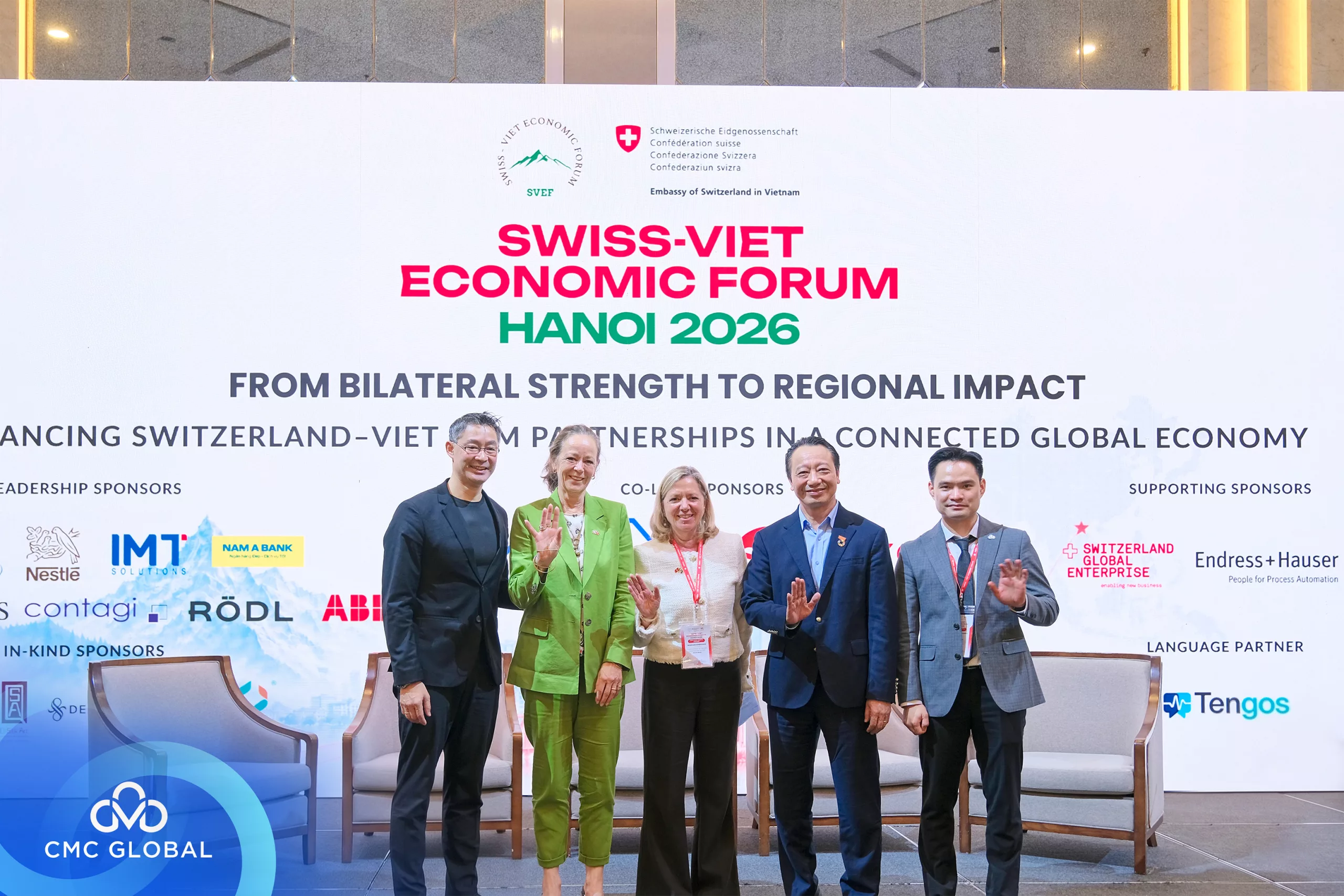
Hanoi, Oct 19th 2026 – The Swiss-Viet Economic Forum Hanoi 2026, organised by the Swiss–Viet Economic Forum (SVEF) in partnership with the Swiss Embassy in Vietnam, is held as leaders of the EFTA states (Switzerland, Norway, Iceland and Liechtenstein) visited Vietnam for the signing of the Vietnam–EFTA Free Trade Agreement.
A highlight of the programme is the high-level panel discussion, “Opening the door: From FTA signature to market opportunity.” The discussion identified the conditions businesses need to capitalise on FTA-driven opportunities, focusing on Vietnam’s growth outlook and Vietnam–Switzerland economic cooperation; opportunities to join and advance in regional and global supply chains; practical priorities for FTA implementation; and the roles of government, trade promotion organisations and enterprises in fostering market connectivity.
Speaking at the panel discussion, Dr. Philipp Rosler, Chairman of SVEF, stressed the need to turn the opportunities opened by the trade agreement into concrete business outcomes through partnerships between the business communities of the two countries.
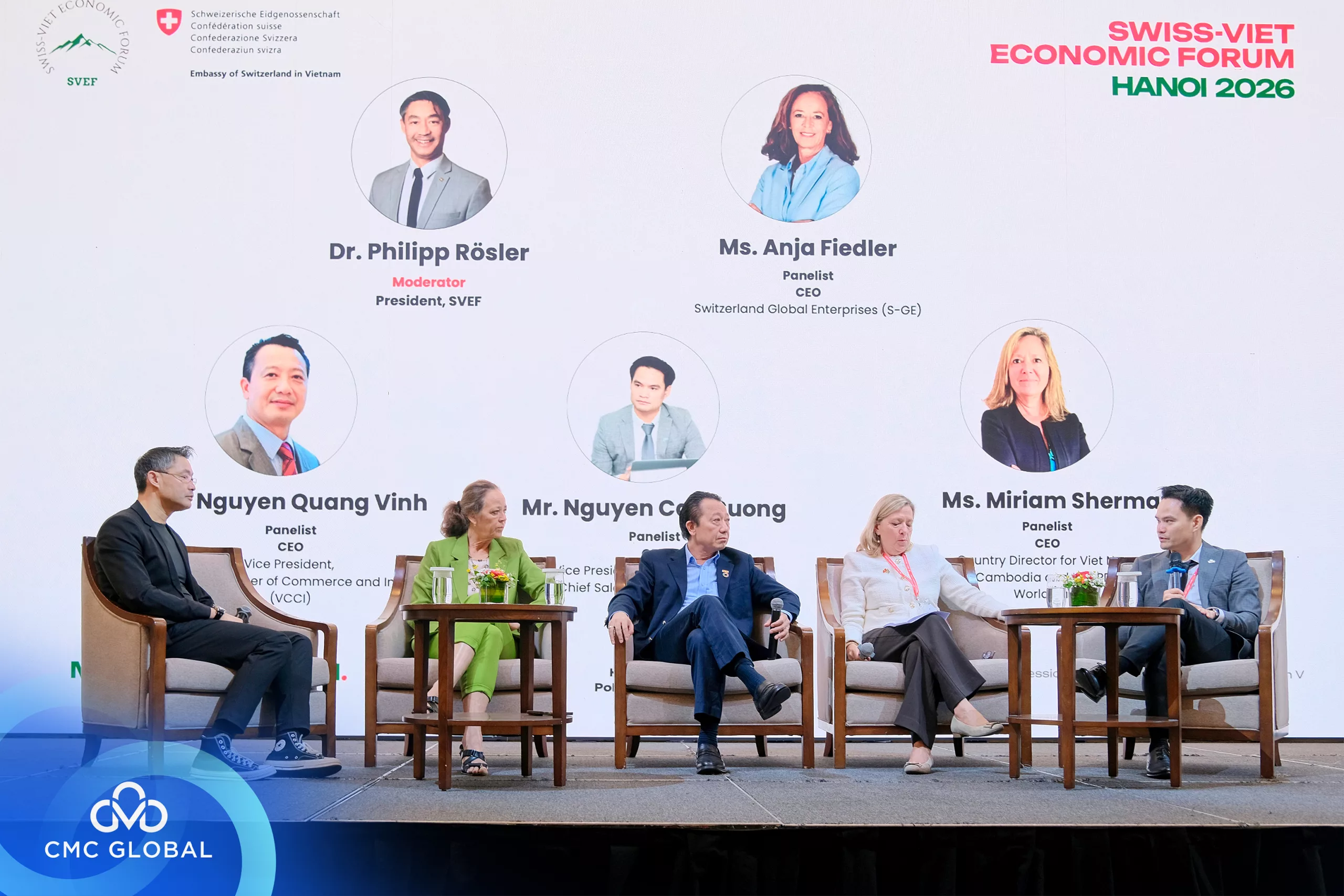
In the technology sector, Mr. Cuong Nguyen Cao, Vice President of CMC Corporation, Chief Sales Officer of CMC Global, shared CMC’s perspective on digital transformation, technology capabilities and innovation cooperation between Swiss and Vietnamese enterprises.
Mr. Cuong noted that even before the EFTA agreement, Vietnam and Switzerland enjoyed technology collaboration. He saw substantial room to expand trade, investment and partnerships in AI, digital transformation, innovation, infrastructure and fintech. With a young population and a high-quality IT workforce, Vietnam has an above-average adoption rate of new Swiss technologies such as AI and blockchain and is well positioned to become a new technology hub for the region.
The signing of the Vietnam–EFTA Free Trade Agreement creates further favourable conditions for bilateral cooperation. However, for these opportunities to come into tangible results, Vietnamese businesses need to proactively strengthen their technological capabilities, workforce quality and ability to meet international standards. This also provides the foundation for businesses to gradually move from simply participating in supply chains to taking on higher value-added stages